

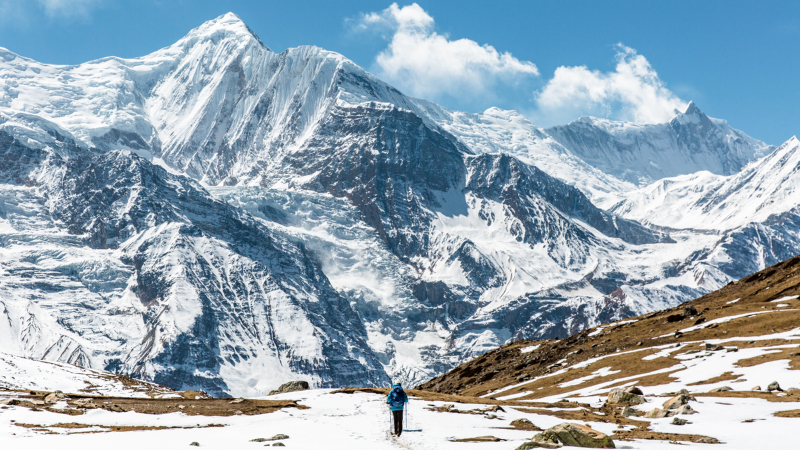
We know that booking your Trek to Annapurna Base Camp should not be a hassle. With a bit of smart planning and the right method, setting up this classic Himalayan journey can require little fuss, be straightforward, and maybe even enjoyable. Annapurna Base Camp trek falls in one of the most picturesque treks in the world, located in the Annapurna Sanctuary in Nepal. But planning is crucial to maximize it, as it involves a major undertaking to arrange transportation, permits and guides, gear, and accommodations in advance.
The first decision you have to make is when to visit. Spring (March-May) and autumn (September-November) are the best times when the skies are clear and the temperature is mild. As soon as you have your dates, you’ll have to make two decisions: whether you want to book through a trekking agency or go independently. For newbies or the time-poor, you’ll be fine to book a full package via local trekking companies that include permits, guides, porters, accommodation, and meals. These companies can be researched online or found within Kathmandu and Pokhara, and take care of all logistics so you can simply get on and enjoy the trail.
Pre-booking ensures your spot, especially during high season when the teahouses fill. There is an alternative: undertake the trek after landing in Nepal. If you like flexibility, then you can plan the trek after reaching Nepal. In the latter case, you might try to add a few days to schedule planning and permit work. Speaking of permits, you will need two of them: the Annapurna Conservation Area Permit (ACAP) and a Trekkers’ Information Management System (TIMS) card. These you can organize through your agency or buy on your own in KTM or Pokhara.
The guide and porter you choose will either make or break you. Guides are not only excellent for safety and local tips, but they also deepen your cultural experiences. A porter takes the weight of your pack, so you are free to concentrate on the trek. Many agencies offer trained, insured employees; otherwise, do a credentials and reviews check, and make sure you are paying fair wages.
You need to be transported to the trailhead, which often departs for the journey from Pokhara, and a jeep or local bus will take you to areas like Sayapul or Ghana Dhuk, depending on your chosen itinerary. The majority of treks are 7 to 12 days, allowing plenty of opportunity to acclimatize and soak in the scenery. When reserving a room, keep in mind that many teahouses have rudimentary rooms and shared bathrooms. Rooms can be reserved very fast during peak seasons, so relying on agency or guide bookings can help reserve a good location.
Finally, make sure to purchase insurance that covers high-altitude trekking and medical evacuation, as medical facilities are scarce in the mountains. “Go through your gear list a long time ahead of the flight date.” Renting gear in Kathmandu or Pokhara is cheap and plentiful, but quality can be mixed, so bring from home whatever you feel you need.
With early planning, extensive research, and smart bookings, your trip to the Annapurna Base Camp can be a hassle-free experience. From the stunning experience of chancing upon mountain views to enjoying the culture of the highland villages of Nepal, an ABC trek is something to remember, and it’s great when everything is taken care of!
The Best Time to Make Reservations for Your Annapurna Base Camp Trek
The best time to book your Annapurna Base Camp Trekis at least 2 and 3 months earlier than of your trek departure if you are planning to accommodate yourself in the crowded peak Spring (March–May) and Autumn (September to November) trekking seasons. These months mean stable weather, clear views of the mountains, and good underfoot trail conditions. On busier treks, these teahouses fill, and the demand for trustworthy guides and porters increases, so making a booking can save you from receiving a subpar service due to lack of availability. If you have flexibility or are traveling in the shoulder season (in early December or February, for example), you might score a last-minute deal, but expect colder temperatures and fewer open teahouses. Whether you book online with a local operator or plan your trek on the ground in Nepal, having a rough itinerary and booking in advance can be helpful to minimize hassle and prevent price surges. It also makes sense for solo travelers or budget trekkers to book transport and permits at least a week in advance. In the end, preparation equals better accommodation, safer logistics, and a more pleasant trekking experience, especially in terms of volatile weather and trail crush.
Should You Hire a Trekking Agency or Do It On Your Own?
ABC Trek Deciding on whether to do a trek with a trekking agency or to go independently is largely dependent on your experience, confidence levels, and budget. Using a properly licensed trekking agency, especially one based in Nepal, makes this a simple, all-inclusive option to book. Such packages generally include permissions, transportation, guides, porters, lodging, and food. It’s perfect for anyone new to trekking or those who don’t have time, as the agency takes care of all logistics. Besides, their local guides share cultural know-how, keep you from passing out in thin air, and are first responders in case you break something. Independent trekking, on the other hand, offers more freedom and flexibility. You can make your itinerary, hire guides or porters if and when you want, and pinch some pennies if you’re thrifty. But you will need to sort your permits (ACAP and TIMS), accommodation, food, and transport for yourselves. It’s a little time-consuming and a bit of a hassle if you’re not familiar with the area or language. Some other trekkers opt for a hybrid: Just hire a local guide or porter in Nepal. If you just want the convenience or the peace of mind, or if you’re traveling to high altitudes and have a tight schedule, then we say go for the agencies. But for the fearless, well-traveled, and thirsting for a bit of magic, independent planning is entirely doable — and fulfilling.
What Licenses Do You Need and How to Get Them?
There are two key permits you’ll need for trekking the Annapurna Base Camp: the Annapurna Conservation Area Permit (ACAP) and the Trekkers’ Information Management System (TIMS) card. These are for everyone, just like for guided and solo trekkers. The ACAP will cost you NPR 3,000 (around USD 25) and TIMS NPR 2,000 (around USD 15) for individual trekkers. If you are hiking with a guide company, they typically have everything arranged for you in advance. Independent trekkers can get both permits at the Nepal Tourism Board office in Kathmandu or Pokhara. You’ll require a few passport-sized photographs, a copy of your passport, and a filled-out application form. We are open for business hours, and the whole procedure is pretty fast; it will take less than an hour. Keep these permits with you at all times — you will be asked for them at checkpoints along the trail, and being unable to show them may lead to a fine or being asked to turn back. The permit fees help with maintaining and conserving the trail in the Annapurna region. And as everyone learned from the Girl Scouts motto favored by the responsible behind-the-scenes producers of the festival: Always be prepared! This way, you won’t have to worry about logistics when your trek begins.
How to Select an Ideal Trek Itinerary for ABC?
Annapurna Base Camp Hike Regarding the itinerary, there are multiple variations of the Annapurna Base Camp trek as well. You can extend the trek up to 12 days from 7-8 days according to your requirement, fitness level, and acclimatization requirement. The classic trail starts in Nayapul or Ghandruk on an easy hike past villages, including Chhomrong, Bambo, and Deurali, before the final ascent to the base camp at 4,130 meters. An ideal 10-day itinerary allows for ample relaxation, sightseeing, and a safe ascent in altitude. Even short treks require a minimum level of fitness and long days. You can also extend your trek to go to Poon Hill for a sunrise view and Jhinu Danda if you’re in want of its hot springs. Your program itinerary will be based on your arrival and departure dates, timing for acclimatization, and the distances of the same from Pokhara. If you’re tight on time, a private vehicle could cut transfer times. When you book through a local agency, you’re more likely to get a flexible or custom-tailored itinerary. Those doing it independently can modify their timetable on the fly, as most teahouses take walk-in guests in off-peak months without requiring pre-booking. Picking the best itinerary for you will allow you to stay safe, prevent altitude sickness, and enjoy the journey without feeling rushed or tired.
What Are The Best Places to Stay the Night on the ABC Trail?
Annapurna Base Camp Trekking Most lodgings on the Annapurna Base Camp trail are teahouses, homes run by Nepali families that can provide simple rooms, meals, a nd service. Accommodations are typically twin shares, with basic beds, blankets, and shared bathrooms. They are un-luxurious but welcoming, and provide a unique cultural experience. In lower-altitude villages such as Ghandruk and Chhomrong, the lodges are a bit more comfortable and have hot showers and Wi-Fi (for a fee). Services grow increasingly rudimentary as you climb, ranging from scant hot water and spotty electricity to diminished dining options. If you’re travelling during high season (March–May, Sept–Nov), consider booking ahead, particularly around popular destinations like Deurali or Annapurna Base Camp itself. Some agencies do pre-arrange your accommodations, meaning you will always have a place to stay, even when fully booked. Independent trekkers might want to arrive early to nab a bed in high season. A sleeping bag is important as its additional insulation is good to have, and it is also more hygienic for hygiene and less disgusting than the blankets in some sleeping quarters, especially as one ascends. All in all, teahouse trekking adds to what one can only call the ABC experience–adventure served with local hospitality.
How to Hire a Guide/Porter for Annapurna Base Camp Trek?
Getting a guide or porter on the Annapurna Base Camp trek is a good idea, particularly if it’s your first time trekking in Nepal. Guides are local people trained to make sure you find your way around trails, learn the cultural background, watch for altitude sickness, and handle emergencies. Your bulky backpack – generally not more than up to 20–25 kgs – is carried by porters, letting you simply focus on your hike. And most travelers end up renting them both, especially for longer trips.
Annapurna Trek The most straightforward way of contracting a guide or porters is with a licensed trekking agency, online before arriving in Kathmandu or Pokhara, or after the fact in either of the cities. Agencies are responsible for insuring the staff, ensuring that they are paid fairly and properly trained, including emergency first aid. If you are hiring privately, be sure to review the person’s qualifications, experience, references, and ability to communicate. Rates are across the board, although $25–35 a day for a guide and $15–25 a day for a porter are the norm, exclusive of tips.
Local employees will also keep you safer and more comfortable while also giving something back to the Nepali economy. Be kind, set clear daily distances and duties, and have a humane and reasonable load for your porter. A trustworthy, helpful, and intelligent guide or porter can be the difference between a good company and alongside with bad memories from your journey.
What to Carry During Athe BC Trek for a Safe and Pleasant Journey?
Annapurna Base Camp Packing List: Packing wisely for a successful ABC trek is crucial. Extreme weather can change quickly, including hot, sunny days at lower elevations and sub-zero nights at Base Camp. Dress in layers: A moisture-wicking base layer, insulating mid-layers (like fleece or down jackets), and a water-repellent, windproof outer shell are all essentials, guys. Remember also thermal underwear, gloves, a hat, and even quality socks for trekking, etc.
Footwear is essential — broken-in hiking boots with good ankle support, which can prevent blisters and other injuries. A durable backpack with rain cover to protect from rain (30- 50L), trekking poles, and a water bottle/flask are indispensable as well. Other necessities are sunglasses, sunscreen, a wide-brimmed hat, a headlamp and an extra set of batteries, and a lightweight sleeping bag (if trekking to higher altitudes where blankets from teahouses may not be sufficient).
Minimum basics for a first aid kit include blister treatment, painkillers, altitude meds (like Diamox if you’re prone to altitude sickness), water purification tablets or a small filter, and any personal prescriptions. Toiletries, a fast-drying towel, wet wipes, hand sanitizer, and toilet paper will make life more comfortable. Packs of fuel, like energy bars or handfuls of nuts or chocolate, are ideal for long days on the trail.
Pack light, but pack smart—what you pack will determine how comfortable, healthy, and enjoyable your trip will be.
How Much Does It Cost For Annapurna Base Camp Trek?
ABC Trekking How much does it cost to trek to Annapurna Base Camp? What one spends on trekking to Annapurna Base Camp varies enormously depending on how you do it. The standard price for a mid-level (10-12 day) guided trek through a local Nepali agency is around $ 600- USD 900, with that price covering permits, guide and porter, transportation costs, food and accommodation. International agencies can cost $1,200–$2,000+ with overhead and premium services.
Independent trekkers might expect to spend about $25 to $40 a day, which should cover food, lodging, permits, and transport. If you are trekking on your own, the right authorisation and permits are sorted. Permit costs alone (ACAP + TIMS) were ∼ $40. Teahouse accommodations are typically $3–6 per night, and a meal is around $5–8 per dish, but prices increase as you ascend.
Other costs can include gear rental (boots, bags, jackets), travel insurance (with helo evacuation coverage), gratuities for guides/porters (usually 10-15% of their fee), and transport from Pokhara to trailheads.
Budget travelers can economize by sharing rooms and forgoing luxury, while those seeking more comfort — private rooms, hot showers, Wi-Fi — should budget more. Have some local currency (Nepali Rupees) with you since you won’t find an ATM on the trail. By planning your budget honestly, you make it a lot easier and less stressful for yourself.
How to Get from Kathmandu or Pokhara to the Trailhead?
Annapurna Sanctuary Trek A typical starting point for your adventure, on your way to the Annapurna Base Camp Trek, is the city of Pokhara, which can be reached from Kathmandu by bus, tourist bus, or domestic flight. The Kathmandu-Pokhara flight is a half-hour sightseeing spectacular with mountain views, while the tourist bus takes 6-8 hours, but is more on the budget side.
Most treks from Pokhara start at either Nayapul, Ghandruk, or Kimche, depending on the trek. These villages are accessible by a local bus or private jeep. Local buses are cheaper, but the trip is slower and less comfortable, and private jeeps are more expensive, but faster and better for groups or for travelers pressed for time.
It’s safer to book transport through your trekking agency or guesthouse. If you are trekking independently, you can organize a jeep ride in Pokhara’s Lakeside district. Build in some time to pick up permits and make last-minute purchases in Pokhara on your way to the trail.
In general, flying to Pokhara and taking a jeep to the trailhead is the fastest and least cumbersome way to get started on your walk. Plan your transport to avoid waiting around and to start your journey off right.
Why is Annapurna Base Camp Trek Travel Insurance so important?
Everest Base Camp Trek Travel insurance is not a formality — it will form the safety net for your trek to Annapurna Base Camp. The hike goes to an altitude of more than 4,100 meters, and the danger of getting altitude sickness, even if injured or sick, is higher. In severe cases, the only way to arrive at a medical facility is via helicopter, at a cost potentially amounting to thousands of dollars, even with insurance.
Your insurance should have coverage for high-altitude trekking (up to 5,000m), emergency medical treatment, trip cancellations, theft, and natural disasters. A lot of standard policies don’t extend to trekking above 3,000m, so have a good look at the small print or investigate specialist providers that offer mountain adventure packages.
And reliable companies like World Nomads, SafetyWing, or Global Rescue provide trekking-specific coverage. Local agencies can also recommend trusted insurers if you’re booking through one.
Besides emergency care, travel insurance gives you peace of mind if you lose your baggage, your flight gets canceled, or when there are delays, which are very possible when flying to and from Pokhara because of the weather.
Bring a hard copy of your insurance policy, have a digital copy on your phone, and share the policy number and emergency contact with your guide. Don’t sleep on it — travel insurance is the smartest thing you can do for your Annapurna Base Camp trek.
Is the Annapurna Base Camp trek hard?
The Annapurna Base Camp (ABC) trek is categorized as moderate, a trek suitable for most people with an average level of fitness. Though not technical climbing or mountaineering, the trail is nevertheless challenging due to the long daily hikes, elevation gain, and terrain. The majority of itineraries are 7 to 12 days (assuming no unusual needs in terms of acclimatization, group dynamics, etc.)
The apex of your hike is ABC itself, at 4,130 meters (13,550 feet). Although most people can safely acclimatize at this altitude, some trekkers will develop mild symptoms of altitude sickness, especially if they try to ascend too quickly. The trail goes up and down large stones, through the forest, across the river, and up and down steep climbs and descents, especially around Chhomrong and the Modi Khola valley.
Also, the weather can modulate the level of difficulty. Rain or snow makes the hike slick, and colder temperatures greet you at the top and can take a physical toll if you’re not prepared.
With adequate physical preparation, the right gear, and pacing, the ABC trek is highly achievable and rewarding. A guide or a porter is also good to help out with physical and logistical problems. All in all, a wonderful Himalayan trek for novices who want a little adventure, and experienced trekkers who just want a beautiful and spike-studded (that’s Himalayan peaks for you) cultural route.
What is the cost of the Annapurna Base Camp trekking permit?
For the Annapurna Base Camp Trek, you need 2 permits.;
ACAP (Annapurna Conservation Area Permit)
Everest Icefall Camp Trek is an easy trek route. Already a TIMS card issued from Kathmandu
As of 2025, the ACAP costs:
NPR 3,000 for foreigners
NPR 1,000 for SAARC nationals
The TIMS card costs:
Hotels.com NPR 2,000 (around USD $15) for solo trekkers
NPR 1,000 if you are part of the group through a registered trekking agency
These passes are a requirement, and you will need to show them at checkpoints along the track. If you’re found without the appropriate documentation, you can expect to pay a fine or possibly be refused re-entry. You can secure both permits in Kathmandu (Nepal Tourism Board office) or Pokhara, a nd most local trekking agencies can arrange these for you if you are booking through a guide service.
You’ll need:
A copy of your passport
Two passport-sized photos
Fees Charges (P) in Nepalese Rupees (NRs.) Cash is Polite fees.
Permit fees help to maintain trail infrastructure, conservation programs, and local community development. Ensure you have both permits readily accessible on you as you trek, and backup both hard copies and digital copies.
When are the seasons to do the ABC trek?
Everest Base Camp can be trekked at any time of the year, but the best and busiest times of the year are spring and autumn:
Spring (March to May):
It’s actually one of the best times to hike. The weather is mild, the temperatures are comfortable, and rhododendrons line the hillsides, splashing color into the trail. Visibility is typically good, although some pre-monsoon cloud development occurs at the end of May.
Falls (Late September to November):
After the monsoon, the sky is very clear, the mountain views are perfect, and the temperature is suitable for trekking pace. The trails are dry, and there’s little risk of landslides or heavy rain. This is ABCTrek’s busiest period.
Winters (December – February):
The trail is less busy, and the sky can be very clear. But yes, it gets quite cold, particularly right from the evening onwards, and then more in the night, and snow can fall at the higher places that you are stepping o, like Machapuchare base camp or ABC. Teahouses may be forced to close temporarily.
Mansoon (June to Early September) :
June-July Rainy season with muddy trails, leeches, and risk of landslides makes it the least recommended time to trek. Clouds cover the mountains a good deal of the time as well.
Your choice of season is important not only for trail conditions, but also for its impact on safety, comfort, and the beauty you will experience.
How many steps is the Annapurna Base Camp?
There are no official total step-counts for the Annapurna Base Camp (ABC) Trek, but some trekkers report climbing thousands of stone staircases, particularly ascending and descending in areas like Chhomrong, Jhinu Danda, and Bamboo. These are sections of traditional village walking paths, constructed for daily use by local people before the era of popular trekking.
One of the most memorable (and challenging) is the stone staircase from Chhomrong to Sinuwa — a grueling several hundred steps that feel even harder with a loaded pack. On the way back, there are also a number of downhill runs through the same set of steps, which can be tough on the knees.
Although the steps increase the level of physical effort, they are in good condition and are safer than crumbly gravel tracks. Trekking poles will also decrease the impact your body takes, and pacing it on these stair sections can help lessen the burn.
These measures also enrich the local culture — many were built and are still maintained by local villagers, mixing tradition with trekking utility. While the actual count depends on the route and any side trips you make, you can expect to climb a few thousand steps as you trek your way to ABC. They’re all a part of what makes this trek special in a way that’s truly rewarding , like the stuff of legend.